There has been a lot of chatter about the potential of AI, specifically the ChatGPT application, within education. I guess this is a ‘hot topic’ and is evolving rapidly, hence the buzz. I am always somewhat cautious about the hype that emerges around new ideas in education. I cautiously embraced knowledge organisers, but from the caution came intelligent consumption and I am now a big proponent of KOs. So in coming to ChatGPT, I was very interested in seeing what educators had to say but I wasn’t rushing to jump in myself. That changed with a conversation with my school’s principal who was a little gushing about it. I thought I’d give it a go, perhaps a little too motivated to be able to reach the conclusion that it isn’t all it’s cracked up to be.
My particular interest was in what colleagues had said about how ChatGPT could support teachers in their work. So I wanted to give it a test. The test was in the format of asking the chatbot to create a scheme of work. I gave it some parameters and, with surprising speed, it started churning out surprisingly good content:
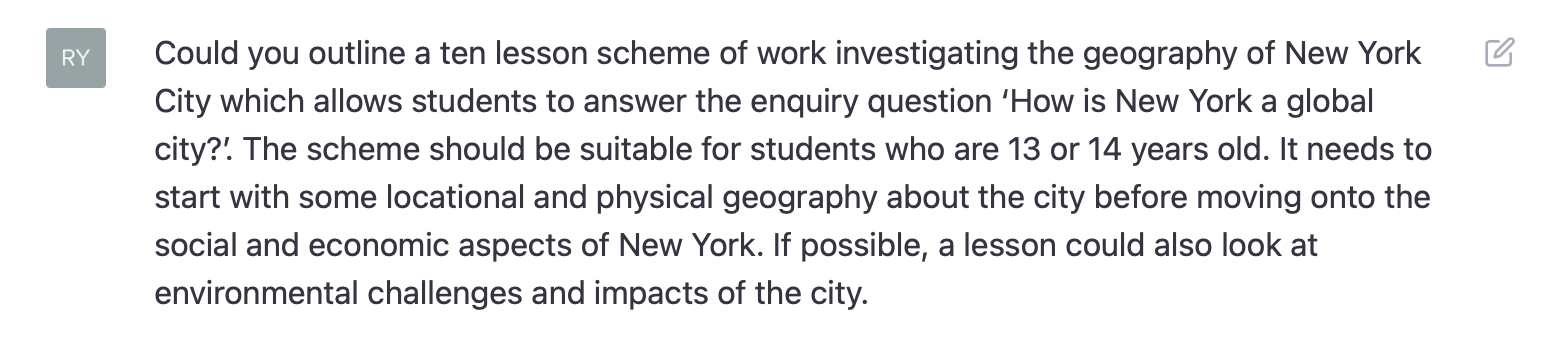
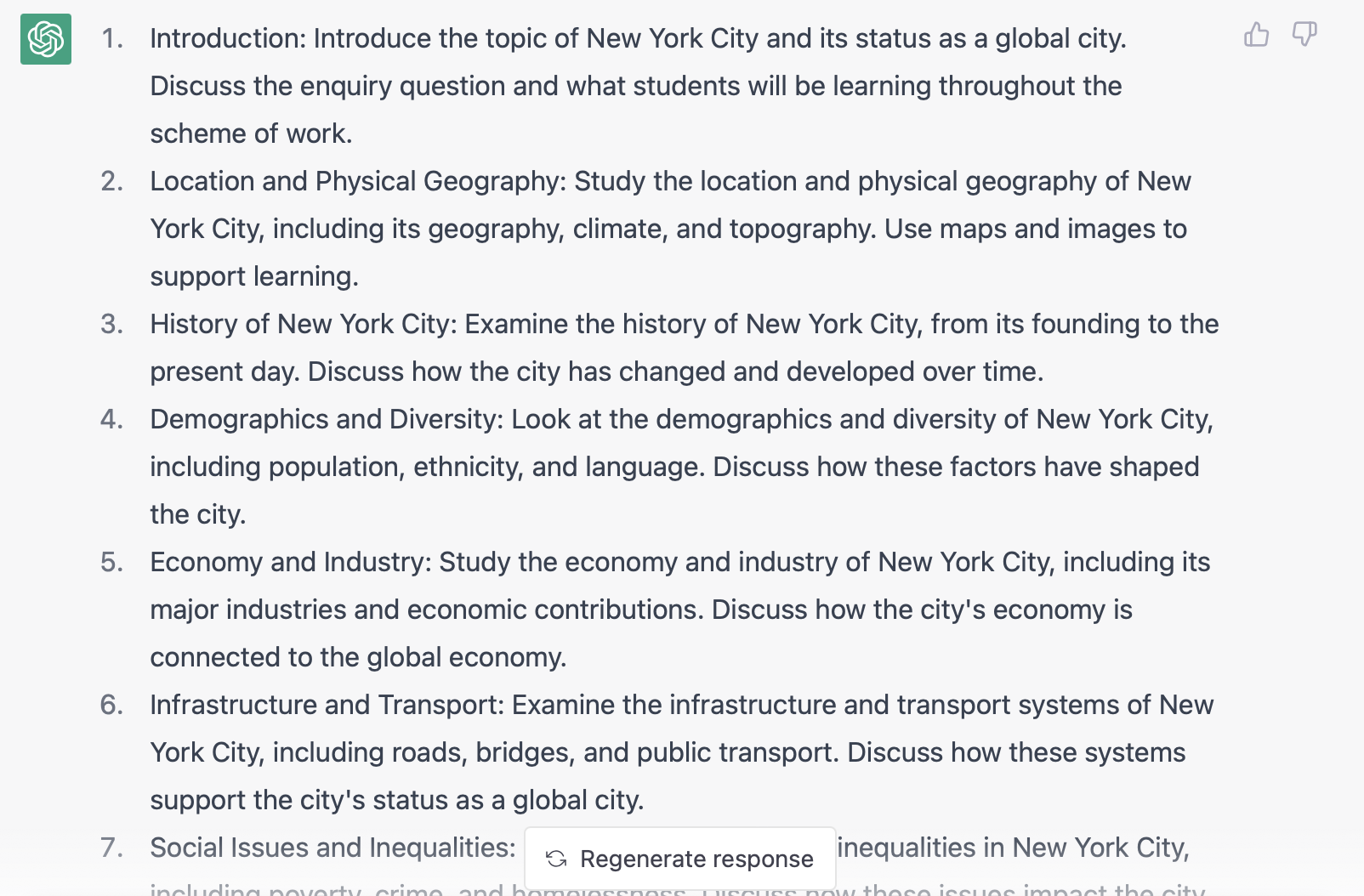
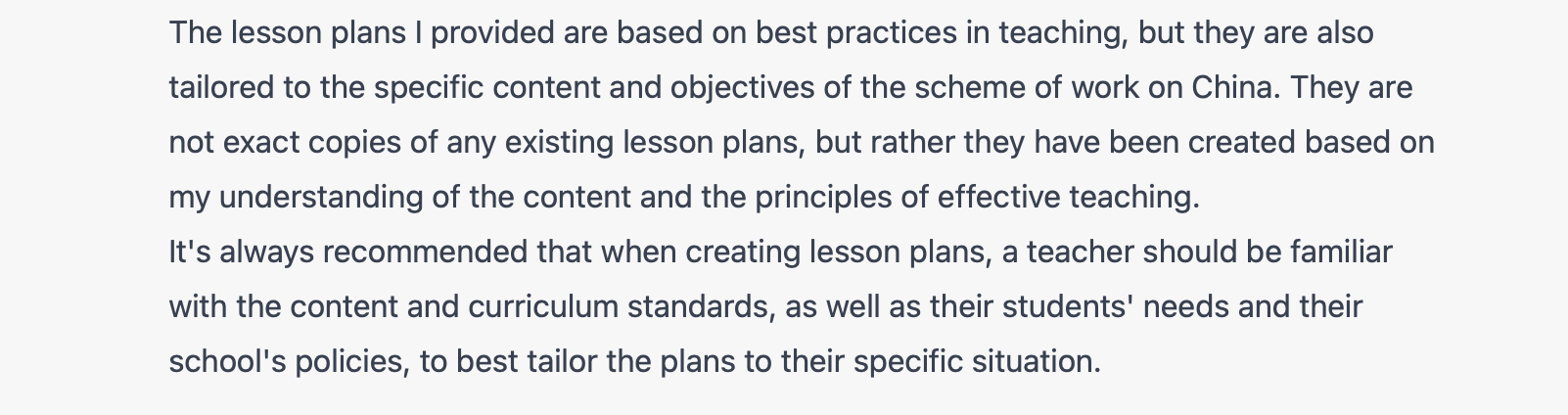
I then asked if it could give me lesson plans. What was interesting wasn’t just the content of the lesson plans (which in reality are outlines, rather than fleshed out plans) but the commentary which ChatGPT gave about how its output should and shouldn’t be used:
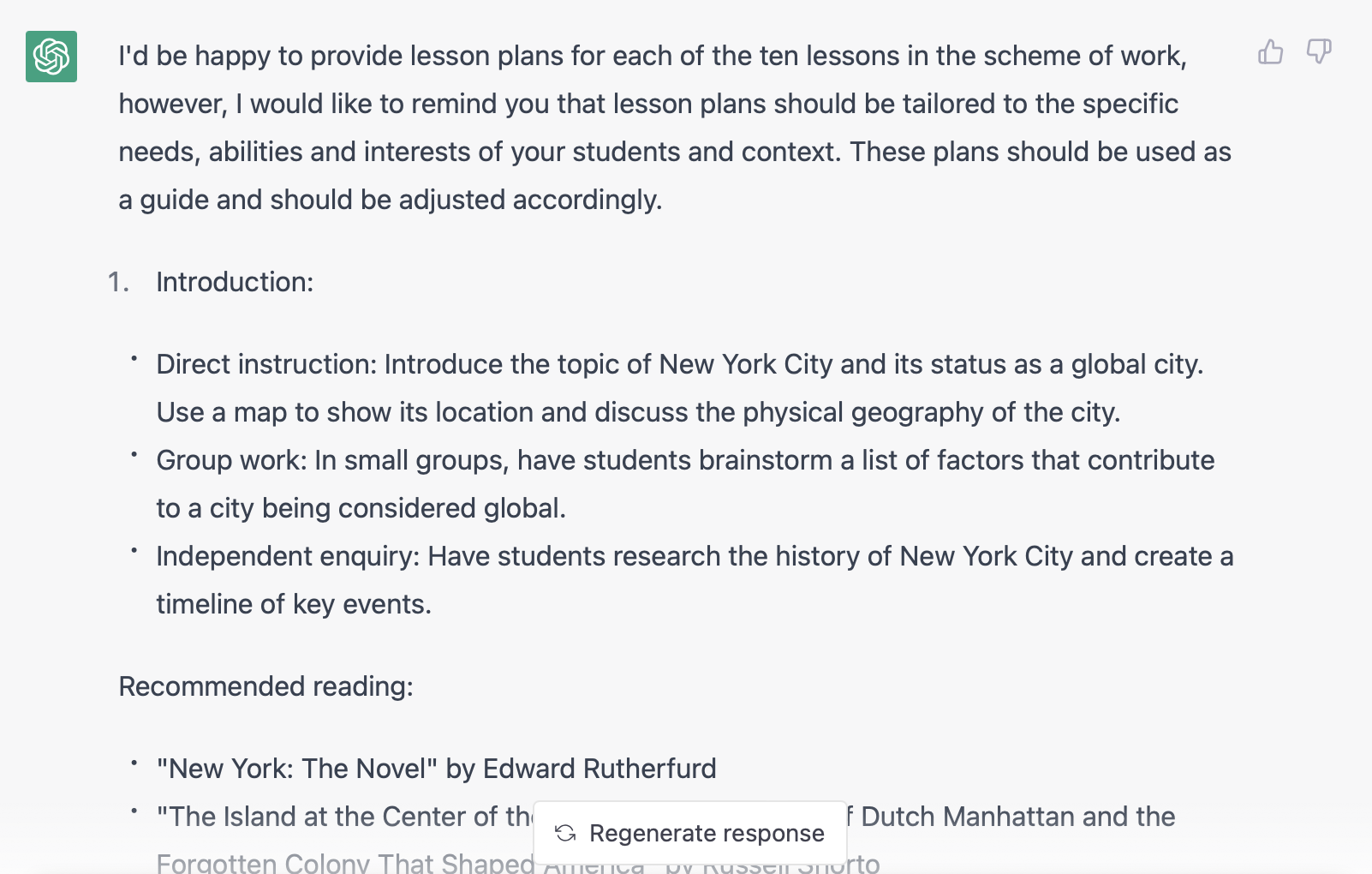
This was a recurring theme as I engaged the chatbot in conversation:
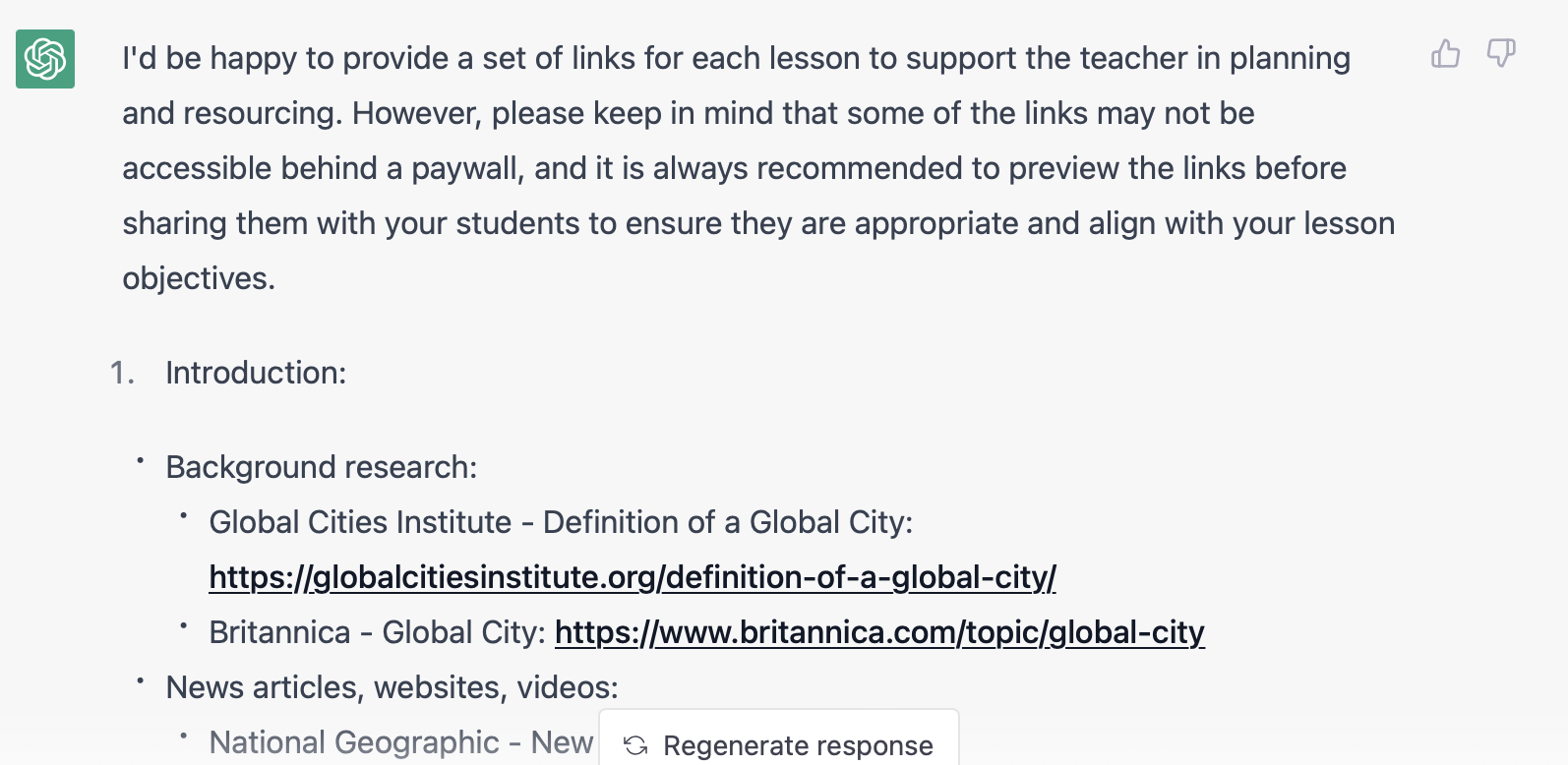
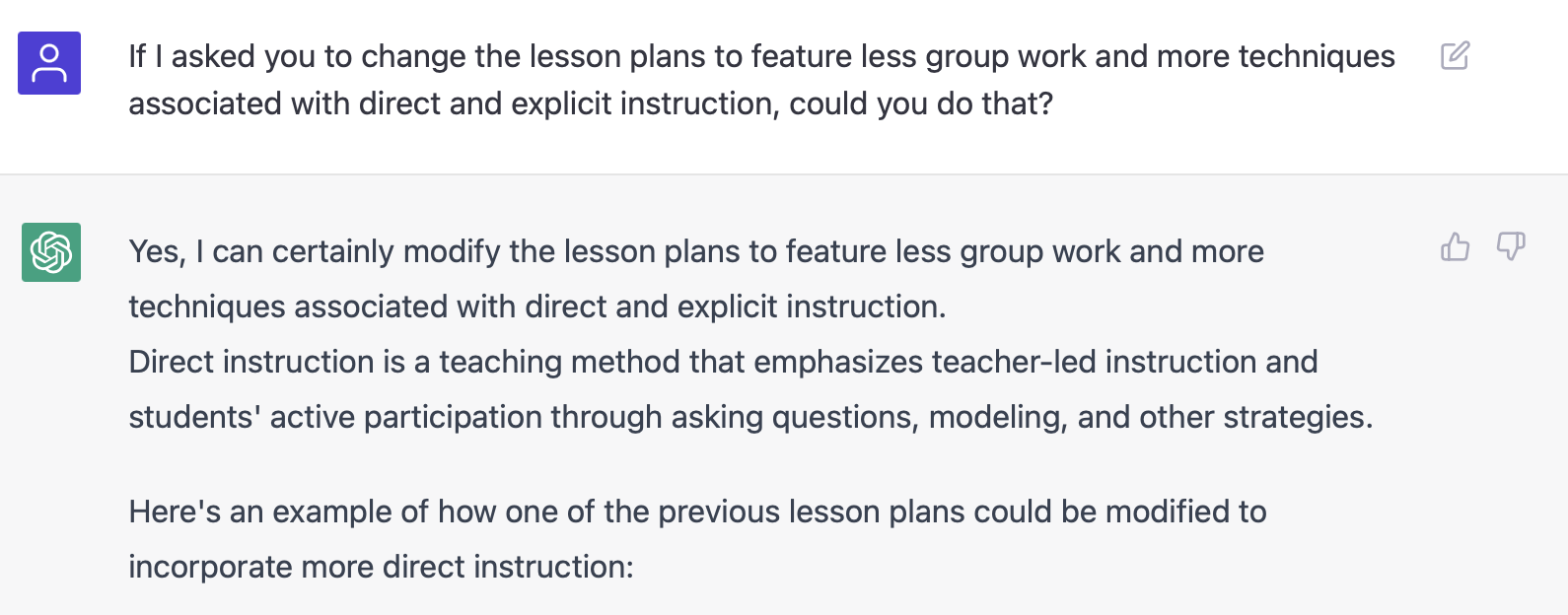
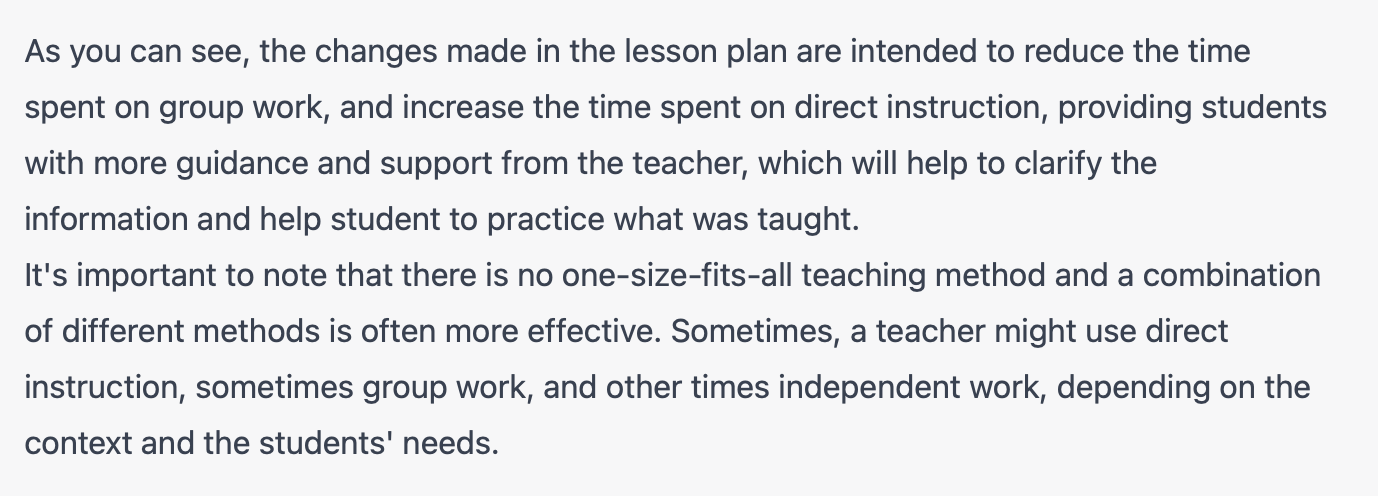
The speed at which the bot could produce and refine content was quite simply brilliant. What is really important to remember though is that this would be a shortcut, a timesaver, but never the finished article. How often though, when confronted with the challenge of planning a new SOW, do you just need some inspiration and impetus, which you can then chew over and refine. Even the bot said so:
Future proof?
Education being profoundly changed by EdTech has been a recurring theme throughout my twelve years in teaching. Yet for all the promise, teaching and learning is still predominantly a human-to-human activity. One positive fallout from the Covid lockdown was the reminder of how powerful face-to-face interaction and the input of a human teacher was to education. Will ChatGPT and future AI have a more profound impact than the tech which has gone before, quite possibly.
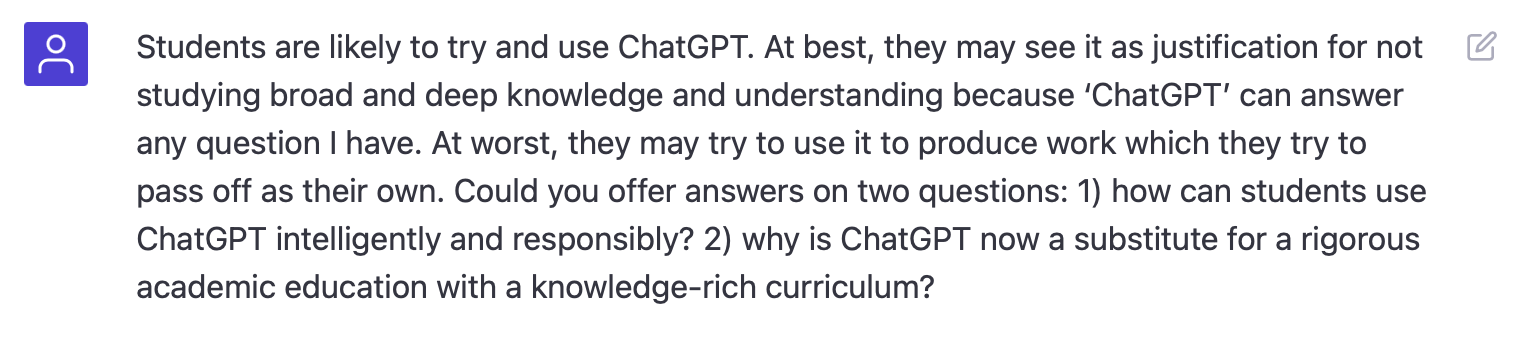
My main fear though is that in the naïveté of youth, kids push back on learning knowledge ‘because ChatGPT can tell me what I need’. Indeed, one point which came out of my discussion with the principal about the potential impact of ChatGPT is that education perhaps becomes more focused on character. This seems a bit faddy, like all the 21st century skills agenda stuff, ‘learning to learn’, etc. I’m fairly convinced that possessing knowledge (broadly defined, to incorporate understanding) is still going to be vital.
I wondered whether ChatGPT would agree and it did. ChatGPT clearly articulated its own limitations and why knowledge was needed:
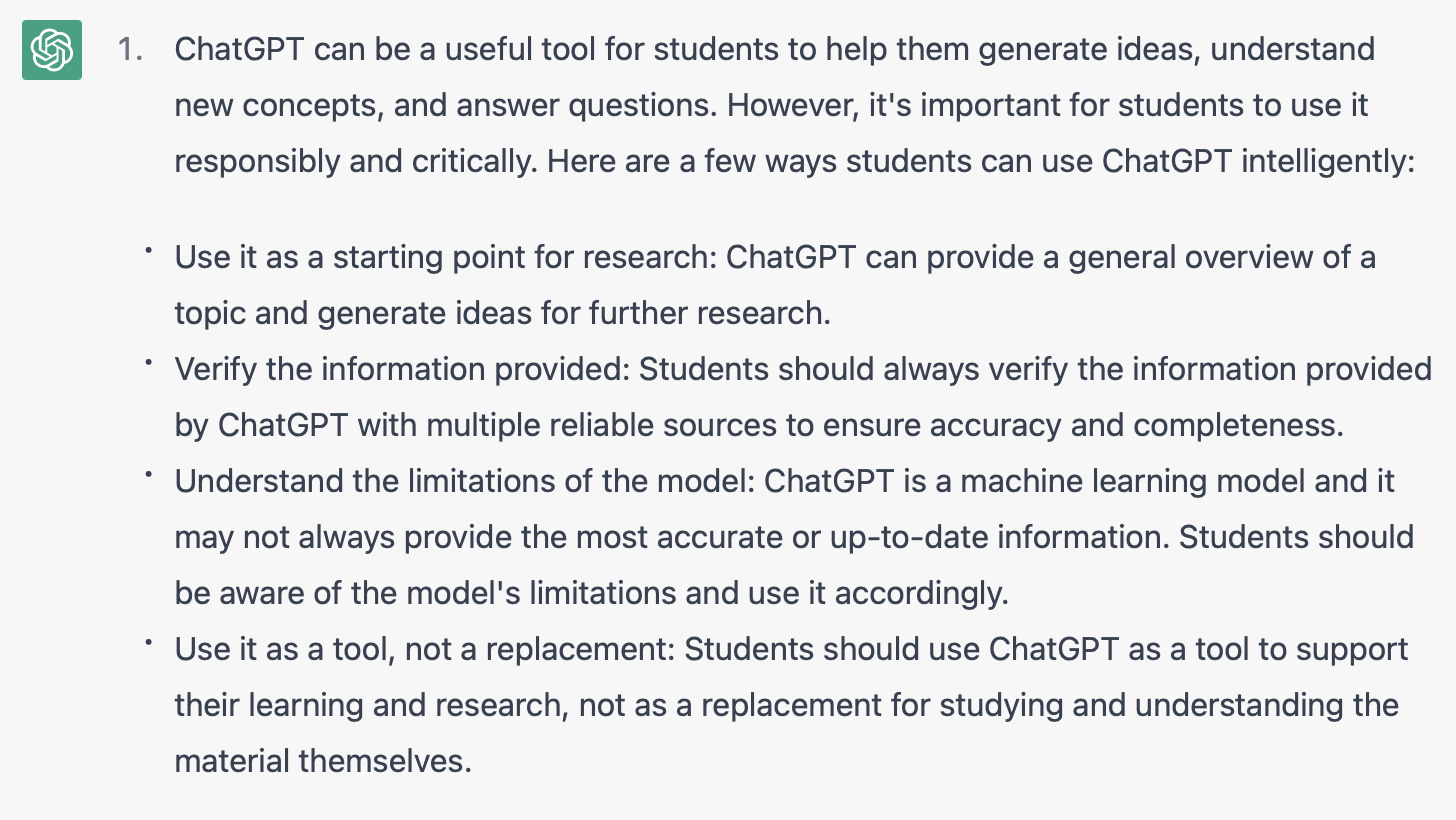
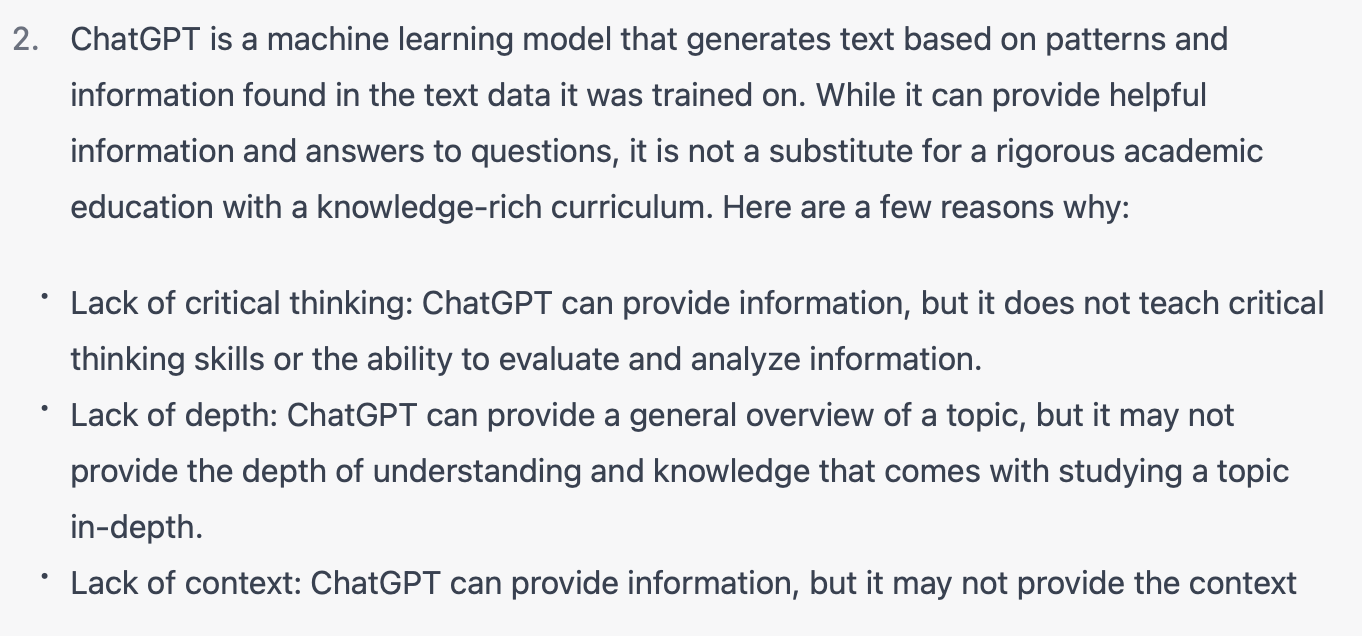

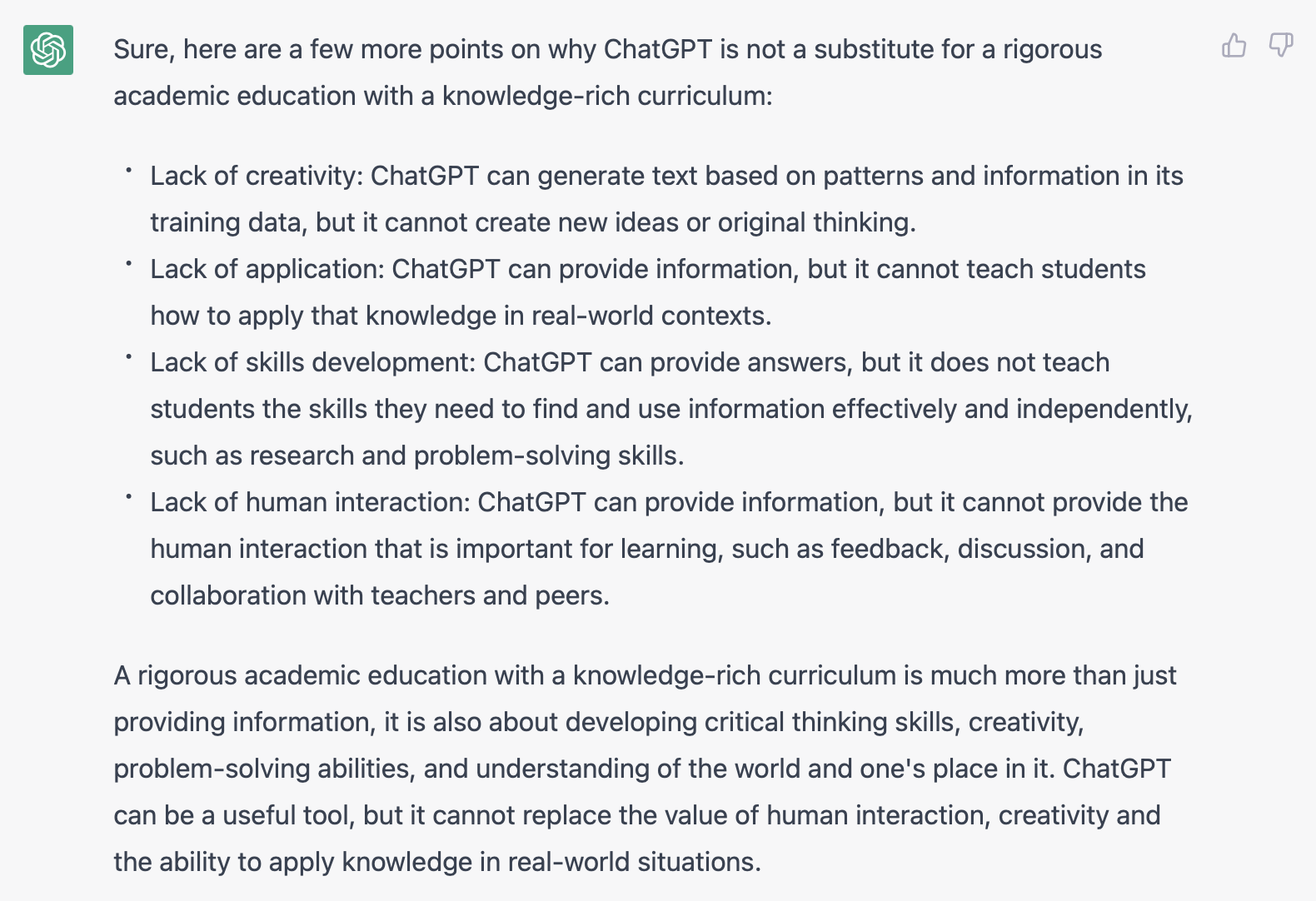

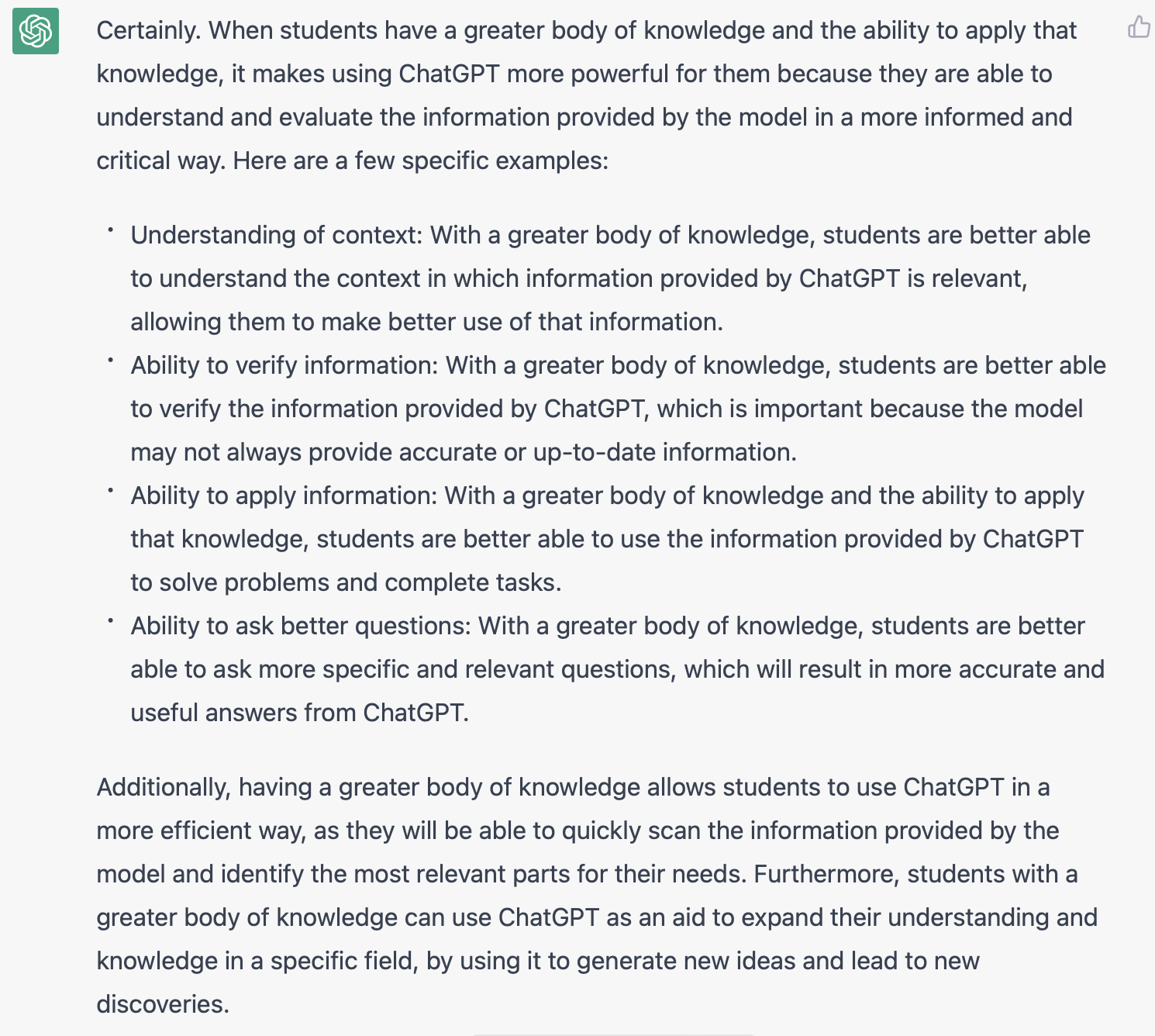
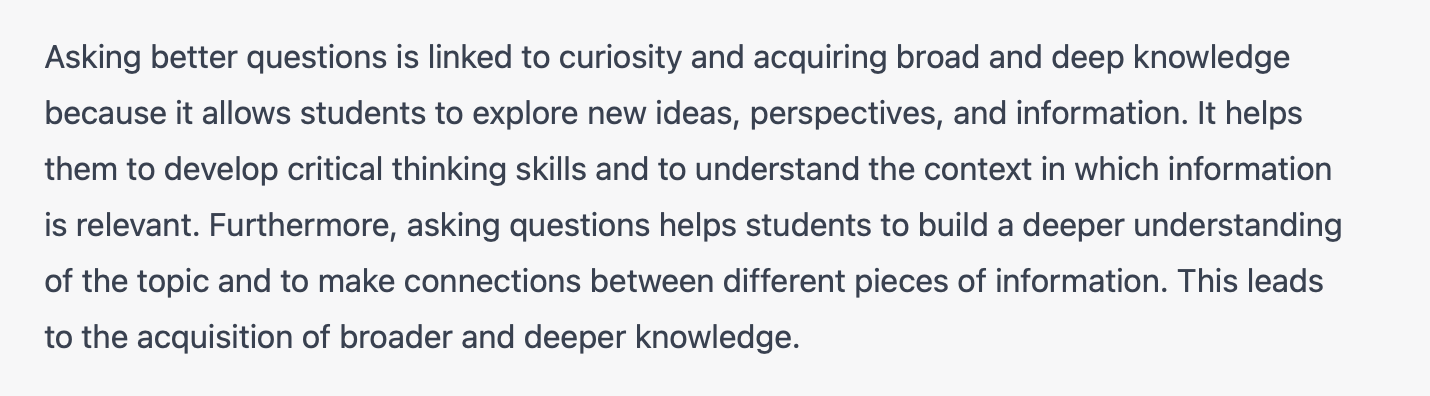
One of the points I wanted to drill into was the cumulative affect of knowledge – the more knowledge you have, the more you can acquire. Knowing stuff allows you to realise what you still need to know, what you can learn next and what questions you need to ask. So our ability to ask questions gets better with knowledge and for ChatGPT, our ability to set questions and parameters allows us to get more from the AI; as the bot says itself:

With ChatGPT’s ‘view’ on this in hand, I thought I’d ask my Year 9 students what they thought about the topic of ChatGPT, AI and its implications for education. What was quite refreshing was just how important they still considered an academically-rigorous, knowledge-rich education to be and indeed how articulate they were about the wider implications of AI. A few ideas they came up with:
- AI may take away some of the necessity of learning stuff, I.e. having to learn certain things for reasons which make it necessary rather than optional and/or desirable, so learning becomes just about pleasure and growth. I thought that was great.
- We’ll need knowledge so we can use the AI, build and make better AI and check that the AI is doing what we want it to.
- We need knowledge to help us make new discoveries, as AI doesn’t (yet) have the ability to create new knowledge like humans do.
- Some jobs can’t be replaced by AI. Teaching was one of the jobs suggested.
- If AI replaced work, what would humans do? What would the purpose of our lives be? This part of the discussion was really quite profound.
Funnily enough, this discussion on ChatGPT comes at a point where I’ve currently got students doing their own individual enquiries on the theme ‘Geography in the News’. To set up this enquiry, I talked with them about the power of asking questions (using my favourite Rudyard Kipling poem, Six Honest Serving Men) and I also shared some of the ideas from Ian Leslie’s writing on curiosity. One particular idea from Leslie was the research from a prestigious university (I forget which) that pointed out that curiosity, along with intelligence and conscientiousness, was one of the top predictors of achievement. Curiosity would also give us a better relationship with AI, using it as a tool to help our learning, rather than to do the learning for us.
I’ll be watching the space around ChatGPT, AI and both the applications and implications for education. In the meantime, I really do encourage you to give it a try.
 Commonplace
Thought provoking. There needs to be serious discussion about AI in the classroom and indeed in many fields and industries and with AI rapidly improving these conversations should happen sooner rather than later
LikeLike